AI & Automation Services in Lahore, Pakistan
Nexentra Solutions builds AI integrations and workflow automation for businesses: connecting the systems a team already uses, taking repetitive work off people, and measuring whether each automation actually saves time.
- LLM integration
- Workflow automation
- Internal tools
- Data pipelines
What does AI automation mean in practice?
Most useful AI work isn't a new product. It is usually quieter: the systems a business already runs get connected, repetitive steps are removed, and the result is measured against the process it replaced. A chatbot is sometimes the right answer, but more often the value sits in a workflow that reads from the CRM, the inbox, documents or a database and does something useful with what it finds.
That is how we approach AI & automation: start from the problem and the data, and treat the model as one component among several. Most of the engineering is in the connections around it.
What we build
- LLM features inside existing software: search, drafting, summarising and decision support built into the tools a team already opens every day.
- Workflow automation: intake, triage, data entry, routing and notifications handled by software instead of copied by hand between systems.
- Internal tools: small, focused applications that give a team one place to review, approve or correct what an automation produced.
- Data pipelines: getting data out of the systems where it lives, cleaning and validating it, and making it usable for reporting or for a model.
How an automated workflow is put together
Most automations follow the same four steps. Each is a place where things can go wrong, so each gets its own design and tests.
| Step | What happens | What to get right |
|---|---|---|
| 1. Existing systems | Data comes from the CRM, email, documents or a database | Access, permissions and which system is the source of truth |
| 2. Ingest and structure | Inputs are normalised and validated | Messy or missing data, duplicates and formats |
| 3. Reasoning layer | A model, rules and guardrails decide what to do | When a model is needed, when a plain rule is enough, and what happens when it is unsure |
| 4. Action | The workflow routes, drafts, updates or notifies | Human review for anything costly or irreversible, and a log of what was done |
How do we choose the technology?
The choice follows the job. A hosted model behind an API is usually the quickest way to test whether an idea works. Some data can't leave a company's own systems, which points towards other options. And many steps that look like AI problems are better solved with ordinary code, which is cheaper, faster and easier to test.
Automations are typically built with Node.js or Python, with MongoDB or PostgreSQL where data needs to be stored, and connected to the tools already in use through their APIs. The same backend and API practices apply: authentication, error handling, retries and monitoring.
Measuring whether it worked
Every automation should start with a baseline: how long the task takes today, how often it happens and what mistakes cost. Without one, nobody can say whether the automation helped. We agree the measure during discovery, then check the result against it after launch.
What the team has built
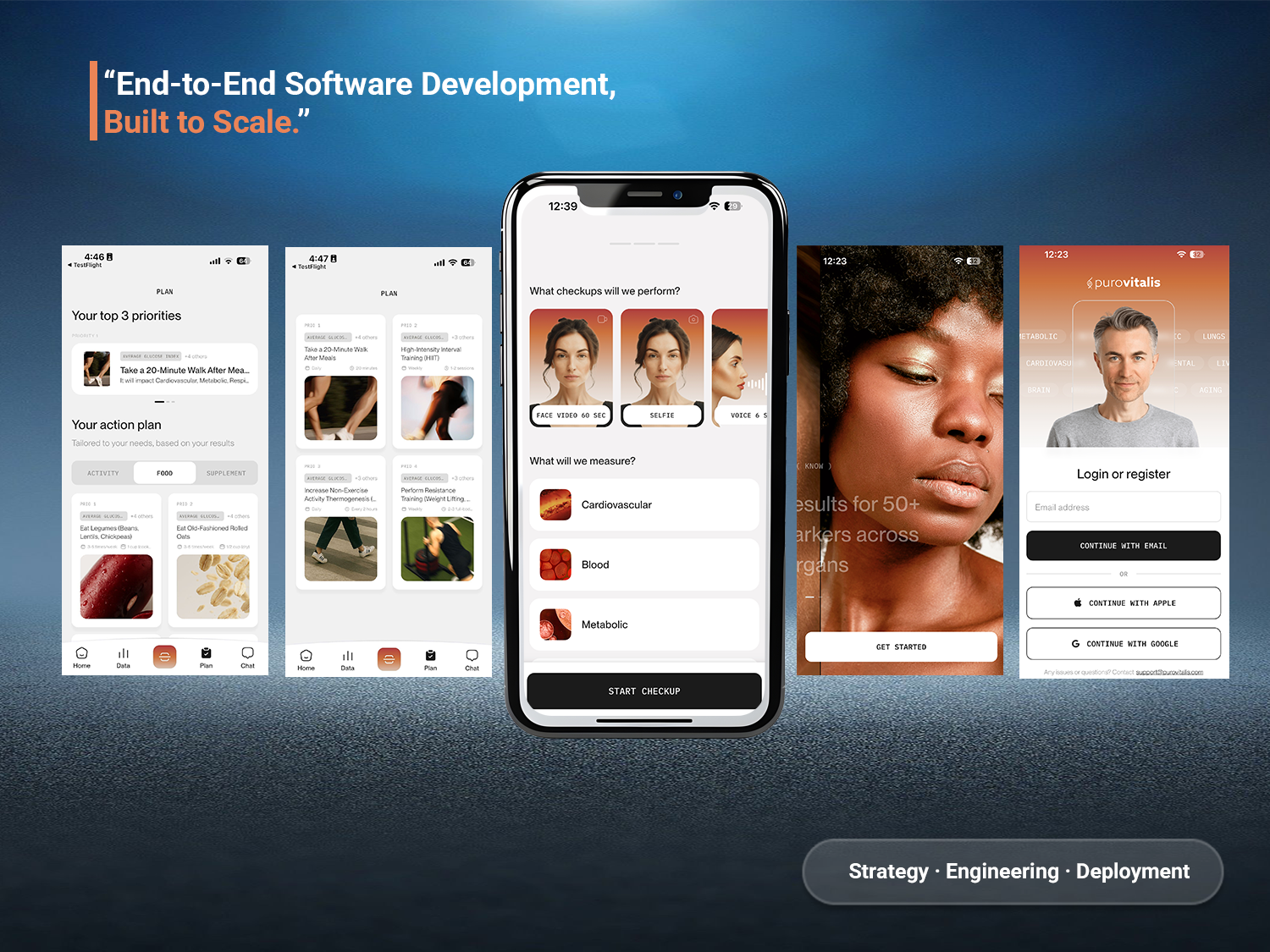
People on the Nexentra team have integrated AI into production products before joining Nexentra. On Youth.ai, six AI screening providers (Shen.AI, Canary Speech, Binah, Gero, MX Lab and Skinive) were brought into one capture experience across more than ten branded health apps; the white-label Flutter build note explains the architecture. On PlatformCore, the team built the integration layer and data pipelines that bring social, analytics and live-chat tools into one product, including automated responses. Both are team experience, not Nexentra client engagements.
What affects the cost of an AI project?
There's no fixed price, because the work varies a lot. The main factors are:
- how many systems need to be connected, and how good their APIs are
- the state of the data: clean and structured, or scattered across documents and inboxes
- whether the work needs a model at all, and how often it runs
- how much human review and logging the workflow needs
- whether the automation needs its own internal tool or fits into existing software
A small, well-defined automation is a sensible first step, because it shows the value before anything larger is built. Our process starts with discovery for exactly this reason.
Starting a project
If there's a task your team repeats every day, or data you'd like to put to work, tell us about it. The first conversation is about the problem, not the model.