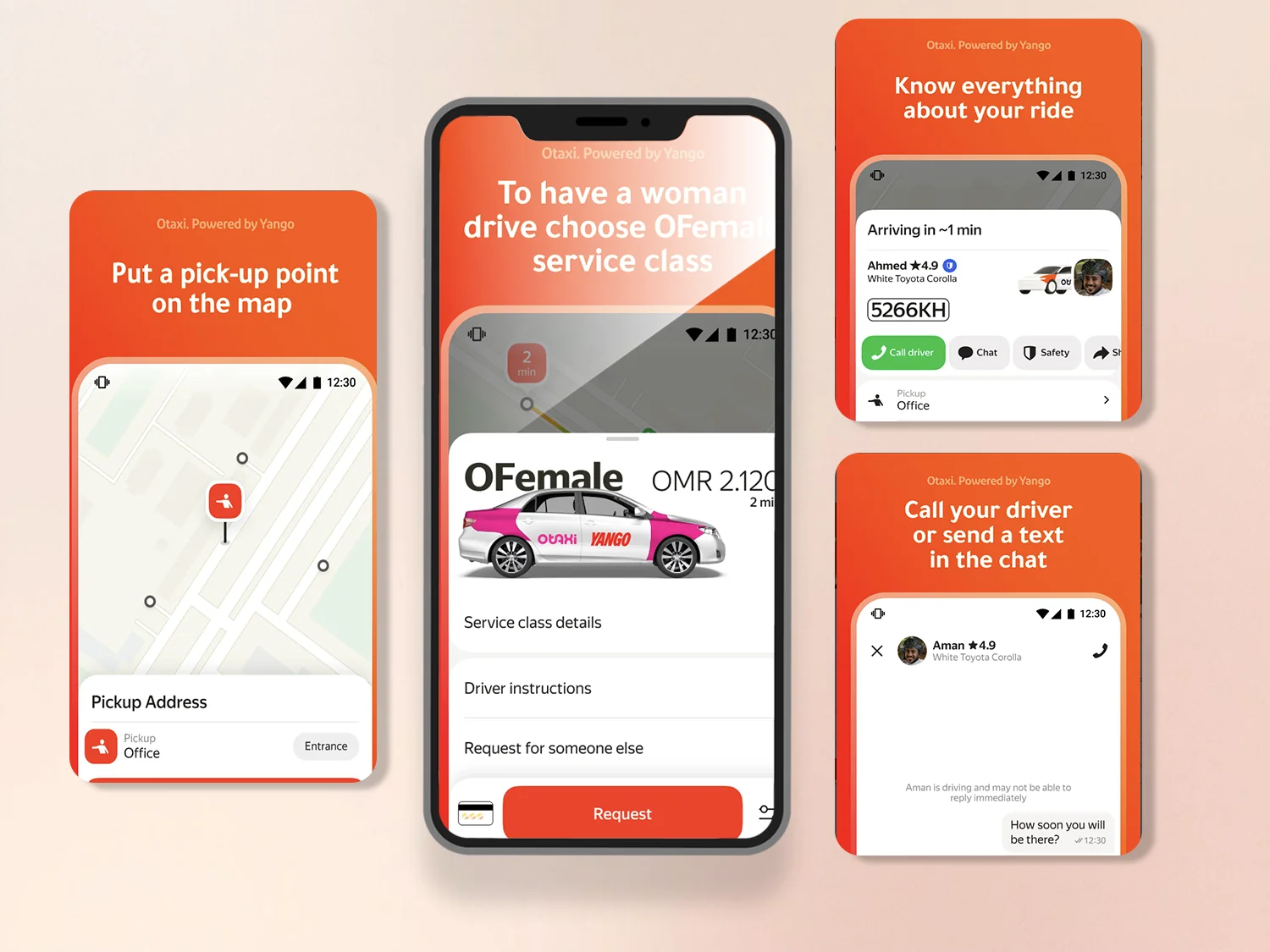
Tasleem Taxi is part of our team's experience, built by people now on the Nexentra team before or independently of Nexentra. You can see the screens in the Tasleem Taxi case study. Here we want to talk about the thing that shaped nearly every decision: the road.
A driver's app is their income
For a rider, a ride-hailing app is a convenience. For a driver, it's the tool they earn with. A missed trip request is lost money. Laggy GPS means a wrong turn with a passenger in the car. An unclear fare is an argument waiting to happen. And a crash halfway through a trip is the worst of all.
Tasleem drivers handle deliveries as well as rides, and they work through the connectivity gaps you'd expect on Oman's roads. "Works on the office Wi-Fi" was never the bar.
Real-time, even in the background
The core of the app is trip synchronisation. New requests arrive as push notifications even when the app is in the background, because drivers aren't staring at the screen between trips. Route changes and status updates reach the driver immediately.
Before accepting a trip, the driver sees a fare estimate. It takes up very little space on screen, and it removes a whole category of disputes later.
Keep drivers in one app
Handing navigation off to a separate maps app would have been simpler to build. But every switch between apps is a moment where a driver can lose the trip screen, miss an update or fumble at a junction. So navigation is built in: live GPS tracking and routing sit in the same app as the trip and the earnings.
The interface follows the same thinking. Trip acceptance, navigation and earnings were designed to be read at a glance. The test was simple: could you use it at a red light without reading a paragraph?
What happens when the signal drops?
Connectivity drops will happen, so the app assumes they will. Offline-aware flows keep the core functions working when the signal goes. Session and trip state is persisted, so if the app is interrupted, the driver comes back to the active trip exactly where they left it instead of starting over.
This is the part that's easy to skip in a demo and impossible to skip in production. A flow that only works on a perfect connection isn't finished.
What else went into it
- rider communication inside the app
- delivery and package handling alongside rides
- journey sharing for safety
- earnings tracking, so drivers can see what a shift was worth
- crash monitoring and structured release pipelines on iOS and Android
The app is built in React Native, which let one codebase serve both platforms.
The lesson we keep
Test where your users actually are. For a driver app, that means moving vehicles, weak signal and a phone mounted on a dashboard. If you're building something people depend on for their work, our mobile app development process puts those conditions into the plan from the start.
- #React Native
- #Offline-first
- #Real-time
- #Ride-hailing
- #Case study