Farm to Home is part of our team's experience, built by people now on the Nexentra team before or independently of Nexentra. The Farm to Home case study has the full picture. This is the thinking behind a few of the decisions.
The idea: fewer middlemen
In Pakistani cities, fresh produce passes through several middlemen before it reaches a shop. Farmers earn less, customers pay more, and the food is less fresh by the time it arrives. Farm to Home connects local farms directly with buyers in Islamabad and Rawalpindi: seasonal fruit and vegetables, poultry, eggs, meat, organic honey and more.
That sounds like a straightforward shopping app. Two things made it more interesting.
An everyday app has to be easy in the best way
People don't browse for groceries the way they browse for clothes. They want to find what they need quickly, trust the price and get on with their day. So the priorities were:
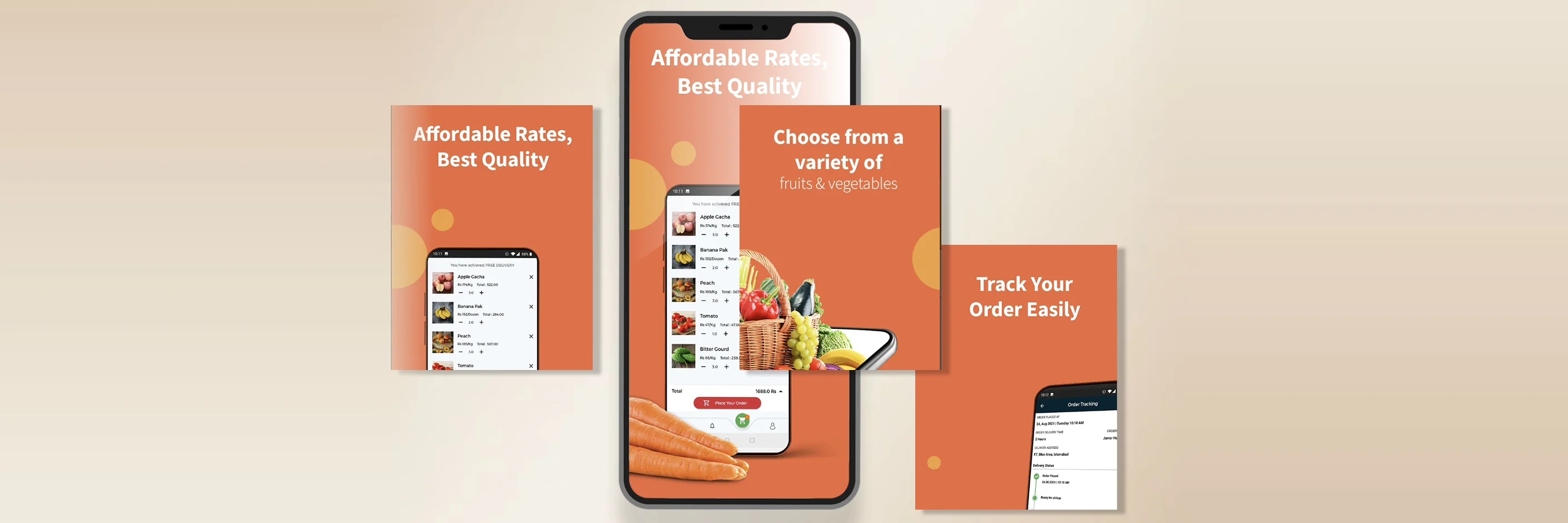
- clear categories, search and filters, so even a first-time shopper finds things in seconds
- clear pricing on every product
- order history with one-tap reordering, because most grocery orders look a lot like last week's
- a cart that survives closing the app, so an order started on the way home can be finished later
Cart persistence sounds minor. In practice, a cart that empties itself is one of the fastest ways to lose a customer.
Can one app serve households and restaurants?
The second challenge was that buyers aren't all alike. Households order for the week. Restaurants, hotels and shops place bulk orders. Building two separate apps would have doubled the work and split the catalogue in two.
Instead, one set of cart logic handles both B2C and B2B orders. The same catalogue serves both kinds of buyer, which means one product to maintain and one place for farms to list their produce.
Keeping people informed
Fresh food is time-sensitive, so communication matters. Push notifications and SMS alerts tell customers about deals, restocks and delivery status. SMS earns its place: not everyone keeps notifications switched on, but a text message usually gets read. Delivery tracking closes the loop from checkout to the doorstep.
What we'd tell anyone building for daily use
Reliability beats novelty. A grocery app gets used every week, often in a hurry, so every bit of friction is repeated again and again. If your product is something people rely on routinely, that's the lens our mobile app development and product design work starts from.
- #Mobile app
- #E-commerce
- #B2B and B2C
- #Push notifications
- #Pakistan
- #Case study